Souk Al Had: Stepping into the Beating Heart of Agadir
There are experiences in Morocco that go far beyond sightseeing moments, where you stop being a tourist and start feeling like a true part of the living, breathing fabric of the country. Souk Al Had in Agadir is one of those experiences. More than just a market, it is a world unto itself, a vast, vibrant, and endlessly fascinating universe of color, sound, scent, and soul that captures the very essence of Moroccan life in a way that nothing else quite can. Whether you are a seasoned traveler or stepping foot in Morocco for the very first time, a visit to Souk Al Had is not simply recommended, it is absolutely essential.
The Story Behind the Souk: A Market Born from Resilience
A Name Rooted in Tradition
"The name Souk Al Had is beautifully simple and deeply telling. In Arabic, "Had" means Sunday, a direct reference to the day the market was originally held many decades ago, when agricultural producers, artisans, and merchants from across the surrounding region would converge on Agadir once a week to trade their goods and catch up with neighbors and friends. It was a tradition as old as the land itself, a weekly rhythm of commerce and community that brought the region together in a spirit of exchange, generosity, and shared purpose."
Rising from the Rubble: The 1960 Earthquake
The deeper story of Souk Al Had is one of extraordinary resilience. In 1960, a catastrophic earthquake struck Agadir, leveling much of the city and claiming thousands of lives in one of the most devastating natural disasters in Morocco’s history. From those tragic ashes, the people of Agadir rebuilt their city with remarkable determination and pride, and Souk Al Had was reborn along with it. What began as a modest collection of market tents in the Amsernat area of the city gradually grew, expanded, and evolved over the following decades into the sprawling, permanent marketplace that stands proudly today. It is a story of a community that refused to be defined by its losses, and the souk stands as one of the most powerful symbols of that spirit.
From Tents to a City Within a City
Today, Souk Al Had is a staggering landmark by any measure. It stretches across more than 13 hectares in the heart of Agadir and is home to over 6,000 shops and stalls. Its surrounding walls rise up to eight meters high, giving the souk the imposing appearance of a fortified city, a small kingdom of commerce enclosed within ancient-looking adobe walls, pierced by fifteen large gates that invite you to step inside and lose yourself completely. On an average day, around 10,000 people pass through its gates. On Sundays and public holidays, that number swells to as many as 30,000 a testament to just how central this place is to the life and identity of Agadir and the wider region.
Inside the Souk: A World of Senses
A Name Rooted in Tradition
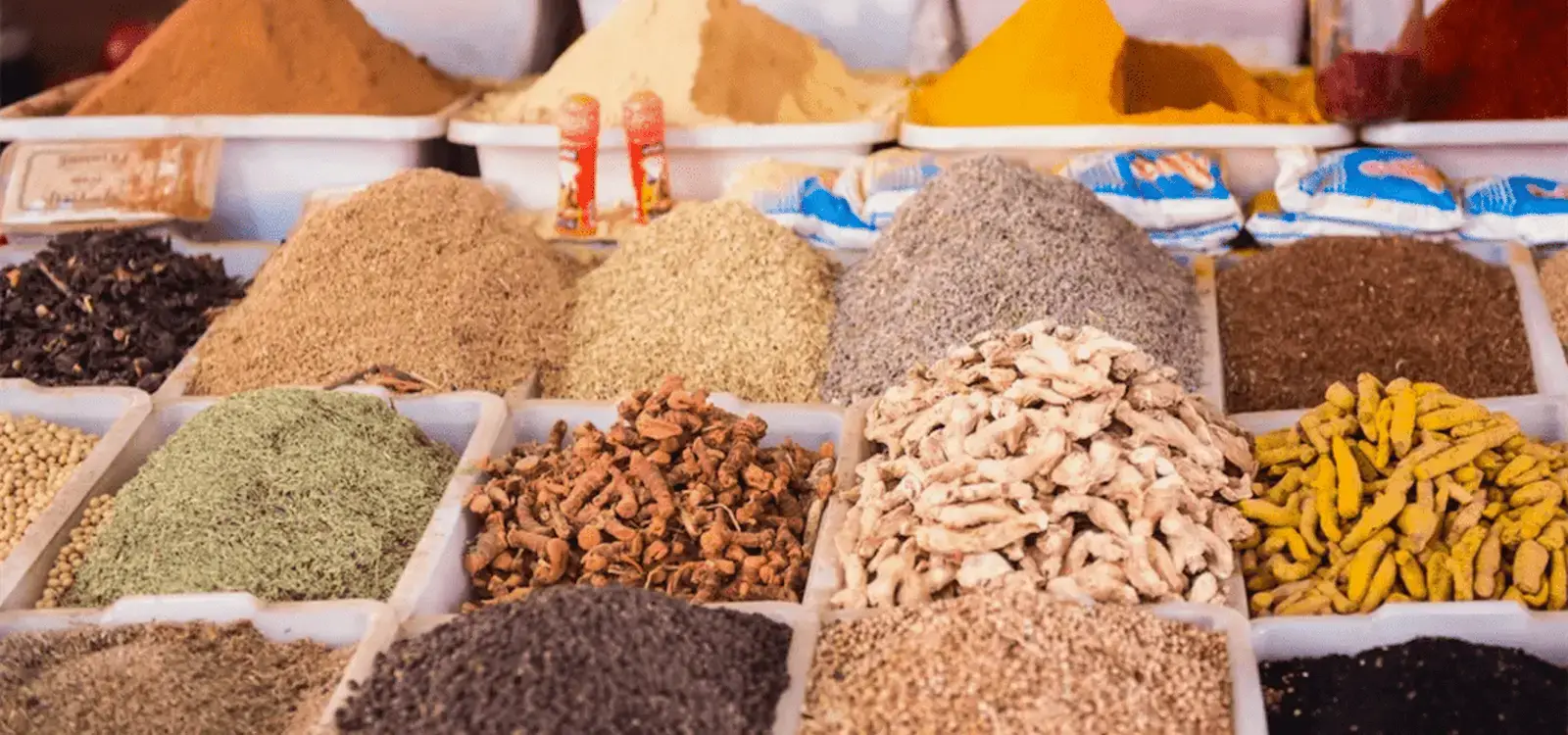
No matter which gate you enter through, Souk Al Had immediately announces itself through your senses. The aroma hits you first a rich, warm, intoxicating blend of spices, fresh herbs, leather, argan oil, and the faint sweetness of dried fruits and Moroccan pastries that drifts through the air like a welcome invitation. The spice section is one of the most atmospheric and visually spectacular areas of the entire souk a kaleidoscope of color where towering pyramids of saffron, cumin, ras el hanout, paprika, and cinnamon are arranged with an artistry that feels almost theatrical. Vendors call out their offerings with a warm enthusiasm that is infectious, and the chance to fill small paper bags with hand-selected spices to take home is one of those simple pleasures that makes Souk Al Had so uniquely special.
Fresh Produce: The Everyday Magic of the Market
Venture deeper into the souk, and you will discover the beating heart of Agadir’s daily food culture, the fresh produce section. Here, locals come every single morning to shop for the day’s groceries, filling their bags with mountains of fresh fruits, vegetables, dates, figs, nuts, and fragrant herbs. The produce is extraordinarily sun-ripened, fresh, and bursting with the kind of flavor that only comes from food grown in the rich soils of the Souss Valley. Walking through this section early in the morning, when the light is soft and the stalls are at their fullest, is one of the most genuinely beautiful and human experiences that Agadir has to offer.
Handicrafts & Artisan Goods: The Soul of Moroccan Craftsmanship
One of the greatest joys of Souk Al Had is the sheer depth and quality of its artisan section, where the very best of Moroccan craftsmanship is on full and glorious display. Hand-woven Berber carpets with intricate geometric patterns that have been passed down through generations. Beautifully crafted leather goods, bags, belts, and shoes shaped by hands that have spent a lifetime mastering their trade. Handmade ceramics, traditional lanterns, carved wooden furniture, woven baskets, and an endless array of locally made decorations that tell the story of Morocco’s rich artistic heritage. This is where you find the real souvenirs, not the mass-produced trinkets of tourist shops, but genuine, handcrafted objects that carry the scent of Morocco and the stories of the people who made them.
Amlou, Argan Oil & the Taste of the Souss Valley
A visit to Souk Al Had without tasting amlou is simply not complete. This extraordinary local specialty, a rich, golden paste made from roasted almonds, honey, and argan oil is one of the most uniquely Moroccan flavors you will ever experience. Spread generously over a piece of warm tafarnout bread or traditional msmen flatbread, it makes for a breakfast that is as nourishing as it is deeply satisfying. The souk is also one of the best places in all of Morocco to purchase authentic, grade-A argan oil, both the culinary variety used for cooking and the precious cosmetic version used for hair and skin, directly from local producers who know and love every drop of what they sell.
The Art of Haggling: A Dance Worth Learning
One of the things that surprises many first-time visitors to Souk Al Had is the realization that the price on the label or the price quoted by the vendor is rarely the final price. Bargaining is not just accepted here; it is an integral and deeply enjoyable part of the entire experience. It is a social ritual, a form of communication, a dance between buyer and seller that when done with good humor and genuine respect, almost always ends with both parties smiling. The golden rule is to start by offering around half of the initial asking price and work your way toward a figure that feels fair and honest. For fresh food and groceries, prices tend to be fixed, but for handicrafts, clothing, leather goods, and souvenirs, the art of the deal is yours to master.
Tips for a Respectful and Rewarding Visit
To get the most out of your time at Souk Al Had, a few simple principles go a long way. Dressing modestly out of respect for local culture, with shoulders and knees covered, is the standard that locals appreciate and expect. Bring cash, as the vast majority of stalls do not accept cards. Come in the morning on a Tuesday, Wednesday, or Thursday if you prefer quieter, less crowded conditions. Sunday is the most spectacular day, but also the busiest by far. And above all, come with curiosity, patience, and an open heart because the greatest rewards Souk Al Had has to offer are not found in its stalls, but in the human connections and moments of genuine cultural exchange that happen when you slow down and simply pay attention.
Food & Rest: Fueling Your Souk Adventure
Eat Where the Locals Eat
After hours of exploring the seemingly endless alleys and sections of the souk, there is nothing quite like pulling up a plastic chair at one of the small, no-frills local restaurants inside the market and ordering a steaming plate of something freshly made. The food section of Souk Al Had is a world of its own. Seafood dishes, fish tagines, grilled sardines, freshly made sandwiches, and traditional Moroccan snacks are all available at prices that will make you wonder why you ever ate anywhere else. For something truly special, head to the charming rooftop café near gate six, where you can sip a slow glass of freshly brewed mint tea and watch the extraordinary theatre of the souk unfold far below you.
Why Souk Al Had Is More Than Just a Market
Souk Al Had is not simply a place to shop. It is a place to understand. It is a place where the history, culture, daily rhythms, and authentic soul of Agadir are all laid out in front of you in the most honest and unfiltered way imaginable. Unlike some of the more tourist-oriented markets in Marrakech or Fez, Souk Al Had remains a deeply local space, a place where real people live their real lives, and where visitors are welcomed not as consumers but as guests. It is raw, it is real, and it is magnificent.
So if you find yourself in Agadir and you are wondering where to go to feel the true pulse of this city, do not hesitate. Follow the walls, find a gate, and step inside. Souk Al Had is waiting for you, and it will give you far more than you ever expected.